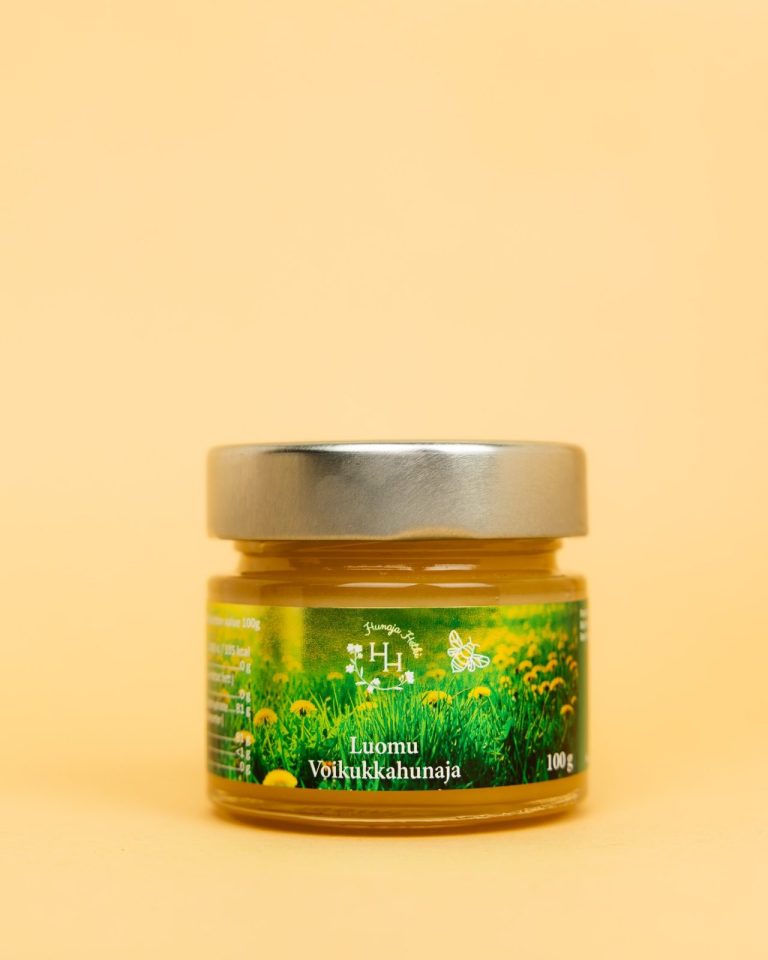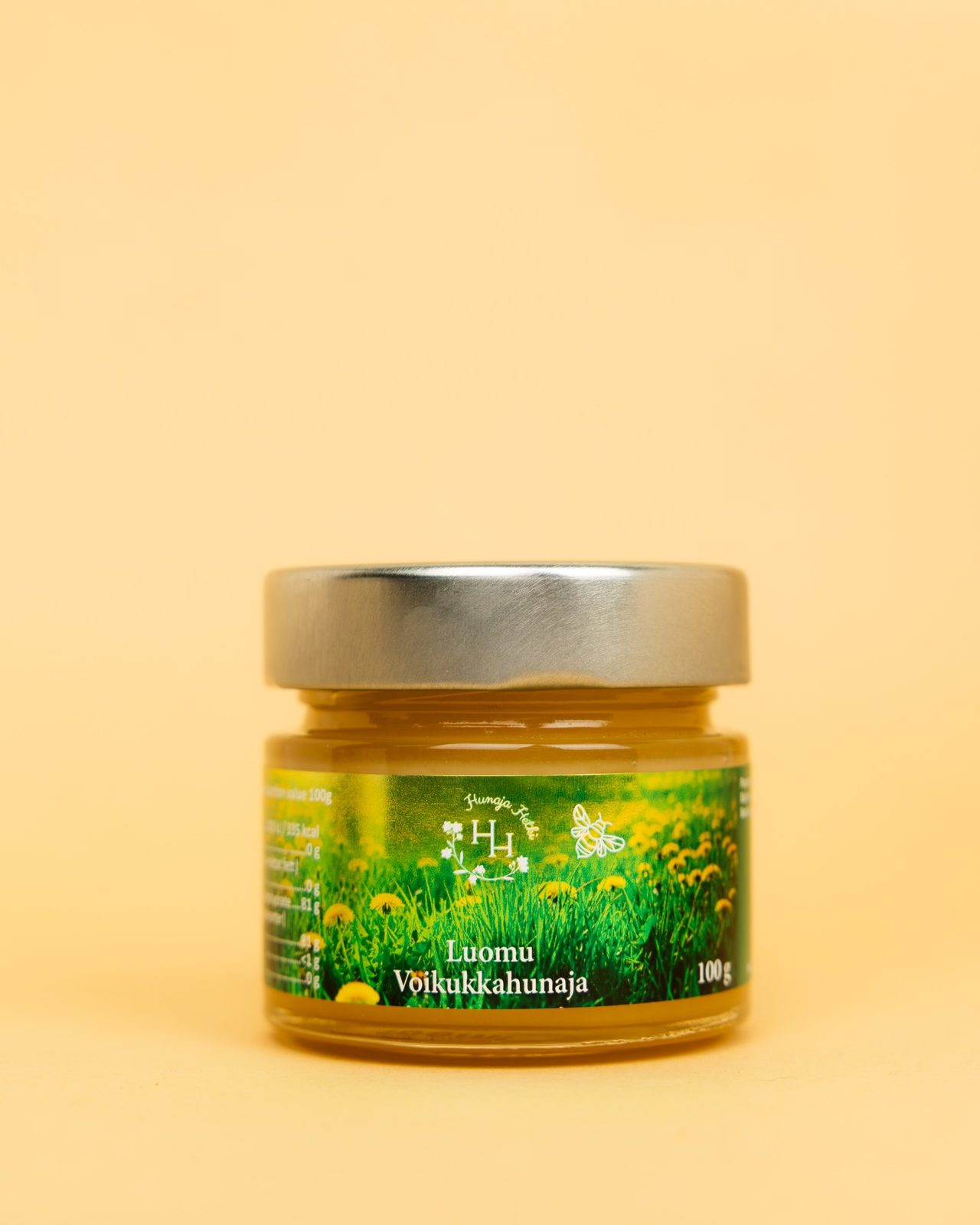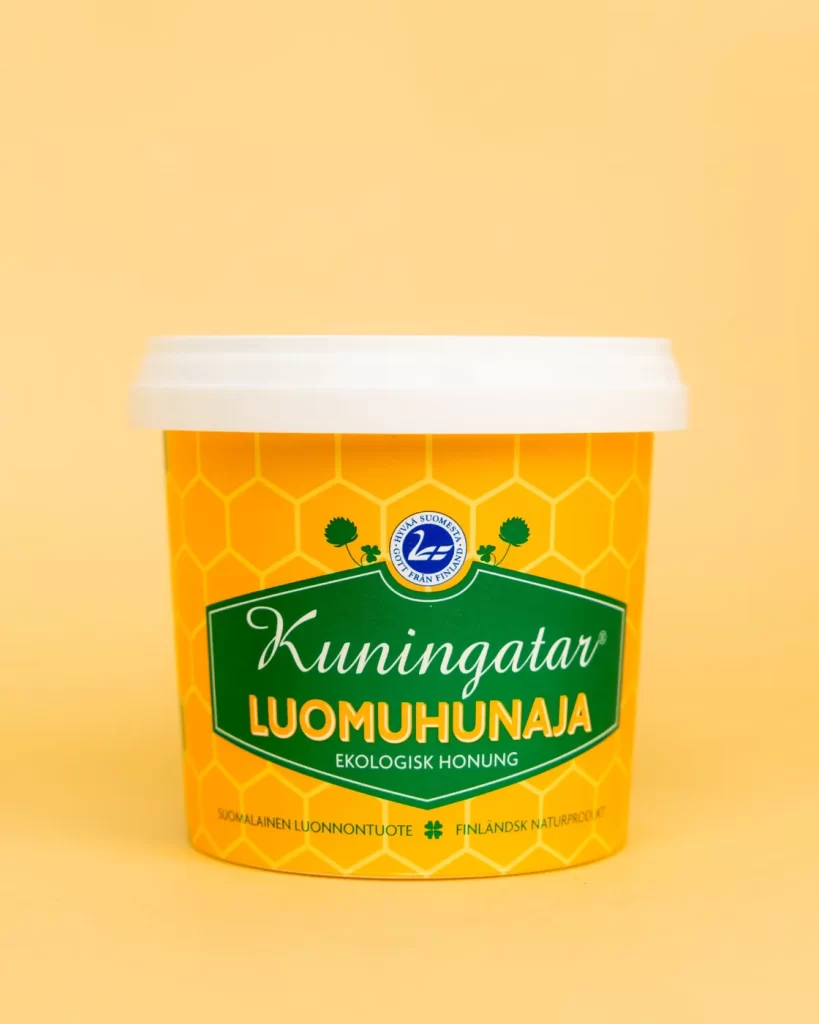
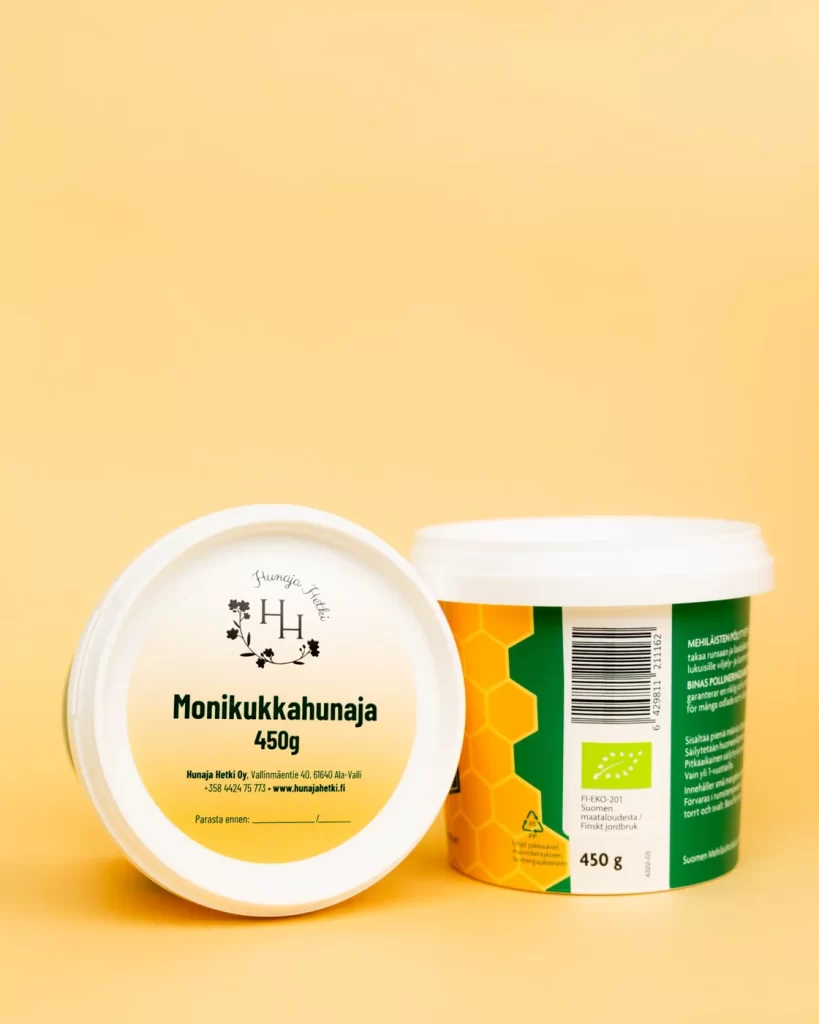
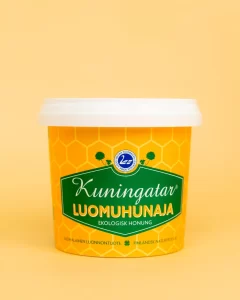
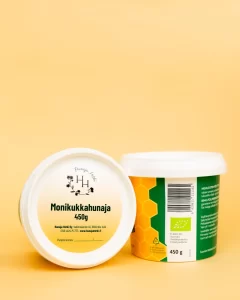
Price range: 8,00 € through 70,00 €
Manufacturer: Hunaja Hetki Oy
Vallinmäentie 40, 61640 Ala-Valli
+358442475773
Country of origin: Finland
Store at room temperature. Long-term storage in a cool and dry place.
Ainesosat: Hunaja
Amount: 450 g
Not for children under one year old.
Ravintoarvot/Närdingsvärden:
Energia/ Energi: 1 382 kJ (330 kcal) /100g
Rasva/Fett: 0 g
josta tyydyttynyttä/ varav mätat fett: 0g
Hiilihydraatti/Kolhydrat: 82g
josta sokereita / varav sockerarter 82 g
Proteiini/Protein: 0 g
Suola/Salt: 0 g
Hunaja on luonnollinen makeuttaja, jota on käytetty ruoanlaitossa. Sen makea maku tekee siitä erittäin suositun aineen niin keittiössä kuin terveyden vaalimisessakin. Hunajaa voidaan käyttää monella eri tavalla, esimerkiksi leivonnassa, teen makeuttamisessa tai sellaisenaan nautittuna. Tutustu herkullisiin hunaja-resepteihimme from here.
Honey is a natural sweetener widely used in cooking and baking. It not only offers sweetness, but also a versatile world of flavors through different types of honey. Flavored honeys have gained popularity in recent years, as consumers have become interested in different types of honey and their unique flavor profiles.
The world of flavored honeys is wide and diverse. The taste of honey mainly depends on its origin, i.e. on which flowers the bees collect nectar from. Different plants have their own distinctive aromas and flavors, which are transferred to honey.
One popular flavored honey is eucalyptus honey. Eukalyptuspuut kasvavat etenkin Australiassa, jossa niiden kukissa on voimakas mentholin tuoksu ja maku. Eukalyptushunajan raikas maku tekee siitä täydellisen ainesosan esimerkiksi leivonnassa tai marinadeissa.
We also have it coffee-, mulled wine-, chili honey preparations etc. from which you can choose according to your own favorite tastes.
Flower honeys are also popular flavored honeys. These honeys are usually made from the flowers of a specific plant, such as clover, violets or roses. The taste of flower honey varies depending on the type of flower and can be, for example, sweet, fruity or slightly tart. Flower honey is very suitable for flavoring various foods and sweetening baked goods.
The world of flavored honeys is not limited to plants only. For example, honeysuckle honey gets its flavor profile from honeysuckle flowers, which give the honey a strong and slightly bitter taste. This honey is especially suitable for eating with cheeses.
It should also be noted that the taste of honey can vary from year to year depending on, among other things, the weather conditions and the quality of the honey collected by the bees. That's why you can find the same kind of honey in different years slightly different.
Getting to know flavored honeys offers consumers new experiences in cooking and preparing delicacies. Various flavors can be used to create versatile and interesting food and drink combinations. The world of flavored honeys is open to everyone who wants to get to know the diversity of honey and find new ways to enjoy this natural sweetener.
Bees are small but extremely important insects. Not only do they flutter around us from flower to flower, but they also produce delicious honey for us. Honey is a natural product that is made using nectar and pollen collected by bees.
A beekeeper is a person who is responsible for the care of beehives and the production of honey. His job includes taking care of the condition of the hives and the feeding and health of the bees. Bees need a lot of care and attention to be well.
Collecting honey starts in the spring, when the first flowers begin to bloom. Swarms of bees set off in search of food, i.e. nectar and pollen grains. Nectar is a sweet liquid secreted by the honeycomb in the flower. Swarms of bees fly from flower to flower to collect as much nectar as possible.
When the bee swarm has found a suitable tasty place, it starts the honey production process. Bees suck up the nectar with their tongues and carry it to the hive. In the hive, the bees chew the nectar and mix their own enzymes with it. After that, they spread the mixture into the cells, where it starts to ripen.
When the honey has matured enough, the beekeeper can start collecting. He goes to the hives to check the ripeness of the honey and picks up the fully finished honeycomb cups. The honeycombs are cut open and the honey is squeezed out or separated from the honeycombs by spinning. The honey is filtered to ensure its purity and shelf life.
Collecting honey is only one part of a beekeeper's everyday life. He also takes care of the health and feeding of the bee swarms, especially during the winter when flowers are not available in nature. Swarms of bees also need space to reproduce, so the beekeeper builds new nests for the swarms.
The world of bees is a diverse and interesting place. Not only do they provide us with delicious honey, but their activity is also important for biodiversity. Bees pollinate plants, which promotes their reproduction and harvest.
Collecting honey and the daily life of a beekeeper require a lot of work and commitment. The beekeeper is responsible for the welfare of the bee colonies and the quality of the honey. Their work enables us to enjoy delicious honey and helps to maintain the balance of nature.
So the next time you taste a spoonful of honey, remember to thank the bees and their hard work! Learn more about our company from here.
| Amount | 1, 5, 10 |
|---|
25,00 €
5,00 €
6,00 €


Select options This product has multiple variants. The options may be chosen on the product page
20,00 €